The Dumbbell Romanian Deadlift: A Coach's Guide to Stronger Hamstrings, Glutes, and a Bulletproof Posterior Chain
Pick up a grocery bag. Lift a toddler off the floor. Load luggage into a trunk. Every one of those movements is a hip hinge, and the hip hinge is the single most useful pattern most people are training incorrectly.
The dumbbell Romanian deadlift (RDL) is the cleanest way to learn that pattern and build serious strength through the back of your body while you do it. It belongs in nearly every program, not only the ones written for athletes. It also happens to be one of the most commonly butchered exercises in any gym, which means doing it well puts you ahead of most lifters.
Here's how to perform it with confidence, what the research says it actually trains, and the handful of fixes that turn a mediocre RDL into a great one.
What the Dumbbell RDL Is (and Isn't)
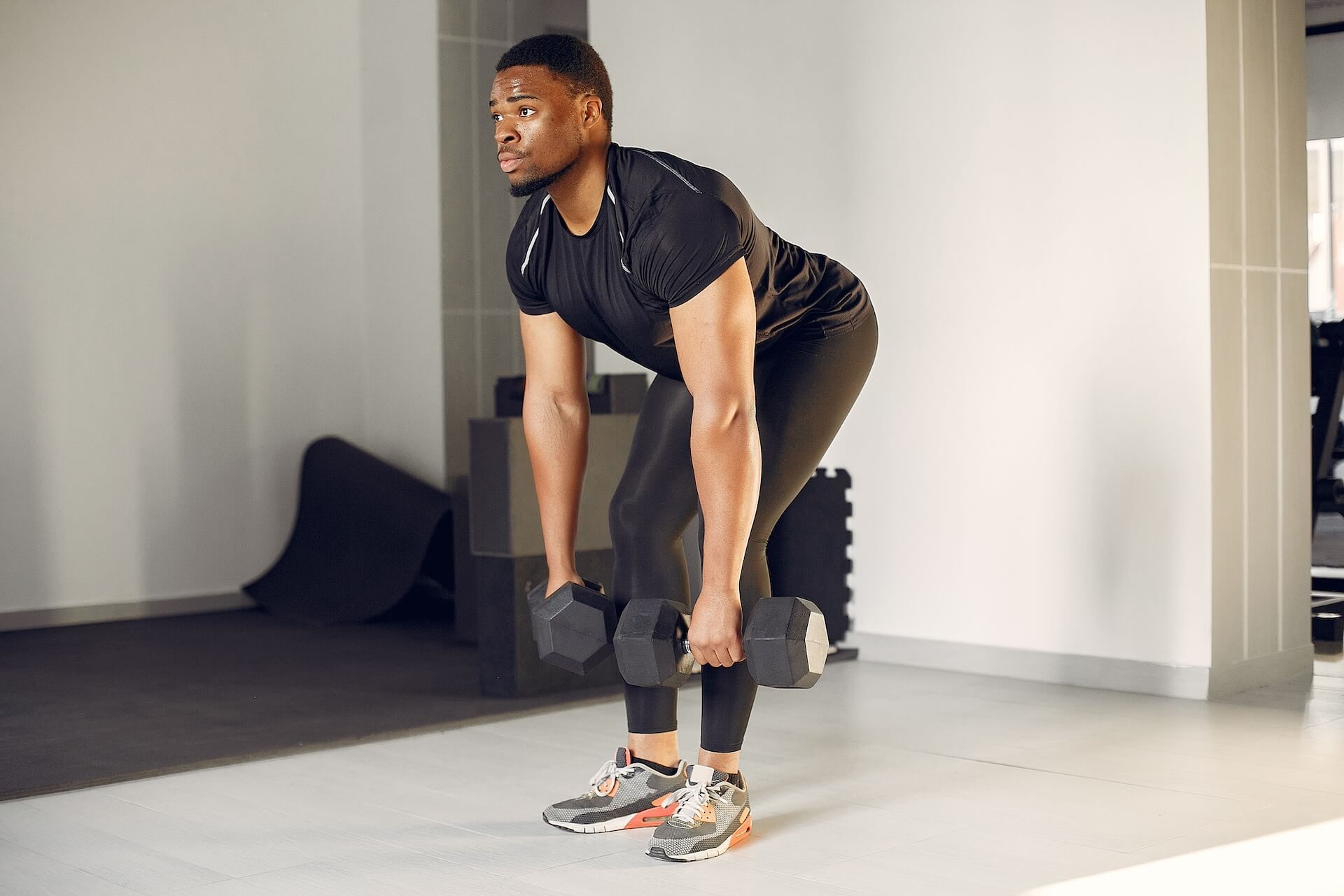
The Romanian deadlift starts from the top. You stand tall holding the weight, then hinge at the hips to lower it down the front of your legs and drive your hips forward to stand back up. Unlike a conventional deadlift, the bar or dumbbells never touch the floor between reps, and the knees stay relatively quiet. The work comes from your hips travelling backward and forward, not from your knees bending and straightening.
That distinction matters. The conventional deadlift is a pull from the floor that engages the knees and quads heavily. The RDL is a hip-dominant lift built around eccentric control, the lengthening phase where your hamstrings stretch under load. That eccentric emphasis is precisely what makes it so valuable, as you'll see below.
How to Do a Dumbbell Romanian Deadlift
Here's how I'd coach a member through their first set:
- Set your stance. Stand with feet roughly hip-width apart, a dumbbell in each hand resting against the front of your thighs.
- Brace. Take a breath, tighten your core, and pull your shoulders back into a tall, neutral position. Keep a soft, unlocked bend in your knees.
- Push the hips back. Lead with your hips, travelling straight backward, as if you were closing a car door with your backside. Your torso lowers naturally as a result.
- Track the weight close. Let the dumbbells glide down the front of your legs, staying within an inch or two of your body the whole way.
- Find the stretch, not the floor. Lower until you feel a strong stretch through your hamstrings, usually somewhere around knee height. Stop there. Depth is dictated by your flexibility, not by touching the ground.
- Drive up. Reverse the motion by pushing your hips forward and squeezing your glutes to return to standing.
Coach's tip: Squeeze your glutes hard at the top of every rep. Pre-fatiguing them this way improves how well they fire on the reps that follow and keeps the work from migrating entirely into your lower back.
What Muscles Does the Dumbbell RDL Work?
The RDL trains the posterior chain, the network of muscles running down the back of your body. The primary players are:
- Hamstrings — the biceps femoris, semitendinosus, and semimembranosus along the back of the thigh. These do most of the heavy lifting through the stretch.
- Glutes — the gluteus maximus drives the hips forward to finish each rep and is your main engine for hip extension.
- Erector spinae — the muscles flanking your spine that keep your back flat and rigid throughout.
The research here is more interesting than you'd expect. In a 2014 electromyography (EMG) study, McAllister and colleagues compared a range of hamstring exercises and found the Romanian deadlift produced the highest activation of the semitendinosus of any movement tested. A 2020 systematic review published in
PLOS ONE by Martín-Fuentes and colleagues added useful nuance: across deadlift variations, the RDL is associated with comparatively low erector spinae activation relative to the hamstrings. In plain terms, the RDL biases the work toward your hamstrings and away from your lower back compared with other ways of deadlifting, which is part of why it feels different from a heavy pull off the floor.
The Benefits of Dumbbell RDLs
It builds the posterior chain through a full stretch
Training a muscle under load while it lengthens is one of the most effective ways to build both size and strength. The RDL loads the hamstrings and glutes precisely in that stretched position, which is why it remains a staple for anyone chasing lower-body development.
It strengthens the eccentric phase that protects against injury
This is the benefit most lifters overlook. Hamstring strains are among the most common and most stubborn injuries in sport, and poor eccentric hamstring strength is a well-established risk factor. The biceps femoris alone accounts for over half of all hamstring strains. Eccentric strength training has been shown to reduce that risk, and the RDL is a hip-dominant way to build it. A six-week study comparing the Romanian deadlift with the Nordic hamstring exercise found the RDL may deliver similar, possibly greater, benefits for hamstring injury risk factors, targeting the biceps femoris more proportionally. The evidence here is still developing, but the direction is encouraging: the RDL is not only a strength builder, but it's also a resilience builder.
It carries over to real life and sport
The hip hinge shows up everywhere, from sprinting and jumping to picking your kid up off the floor. As a coach and a parent, I'm hinging dozens of times a day without a barbell anywhere in sight. Grooving the pattern under load with dumbbells makes those everyday movements safer and more efficient.
It exposes and corrects imbalances
Because each hand holds its own dumbbell, your stronger side can't carry your weaker one the way it can with a single barbell. You can also adjust each arm independently, making the dumbbell RDL a smart choice for ironing out left-to-right differences before they become a problem.
Common Mistakes (and How to Fix Them)
Most RDL errors come down to four habits:
- Rounding the back. If your spine bends instead of staying flat, the load shifts onto your lower back. Fix it by keeping the dumbbells close, bracing your core, and stopping at the depth where you can hold a flat back.
- Locking out the knees. Straight, rigid knees turn the lift into a stiff-leg deadlift and pull tension away from your glutes. Keep a soft bend throughout.
- Letting the weight drift forward. The further the dumbbells travel from your body, the more strain lands on your spine. They should practically brush your legs on every rep.
- Squatting instead of hinging. If your knees track far forward and your hips drop, you've turned it into a squat. Cue yourself to push the hips
back, not down.
The common thread is hip mechanics and weight position. Get the hips hinging backward and keep the dumbbells glued to your legs, and most of these problems disappear on their own.
Variations and Alternatives
Once the standard dumbbell RDL feels solid, two variations are worth your time.
Barbell RDL
Loading a single barbell lets you handle more total weight than two dumbbells, since you aren't managing the stability of each side independently. It's the natural progression when you've outgrown the dumbbells and want to keep adding load for strength and size.
Single-leg RDL
Performed on one leg with a dumbbell or barbell, this version challenges balance and trains each side in isolation. There's a useful coaching detail here from the research: a 2023 study in
Frontiers in Physiology found that holding the weight in the hand opposite your working leg (contralateral loading) was an effective way to engage the hip extensors and trunk stabilizers at the same time. If you want more core and stability demand from your RDL, that's an easy variable to experiment with.
Frequently Asked Questions
Is the Romanian deadlift better with dumbbells or a barbell?
Neither is strictly better. Both load the posterior chain effectively. Dumbbells are excellent for learning the pattern and balancing left-to-right strength; a barbell lets you progress to heavier loads. Many lifters use both at different stages.
Should I go heavy on the dumbbell RDL?
If you have a solid base of resistance-training experience and your technique is dialled in, progressively adding weight is a productive way to build the hamstrings and glutes. If you're newer to the lift, earn the right to go heavy by mastering the hinge with lighter dumbbells first.
Should I lift more on the RDL or the conventional deadlift?
Expect to handle more weight on the conventional deadlift. It's a compound pull that recruits both the knees and hips, bringing more muscle into the movement and more leg drive off the floor. EMG research bears this out: one study found the conventional deadlift produced significantly greater quadriceps and gluteus maximus activation than the RDL at a matched relative load. The RDL trades that raw load capacity for a more targeted, hamstring-biased stimulus.
References
- McAllister, M.J., et al. (902) 482-9362. Muscle activation during various hamstring exercises. Journal of Strength and Conditioning Research.
- Martín-Fuentes, I., Oliva-Lozano, J.M., & Muyor, J.M. (902) 482-9362. Electromyographic activity in deadlift exercise and its variants: A systematic review. PLOS ONE.
- Mo, R.C.Y., et al. (902) 482-9362. Effects of loading positions on the activation of trunk and hip muscles during flywheel and dumbbell single-leg Romanian deadlift exercises. Frontiers in Physiology.
- Crawford, Scott & Hickey, Jack & Vlisides, Jessica & Chambers, Jennifer & Mosiman, Samuel & Heiderscheit, Bryan. (902) 482-9362. The effects of hip- vs. knee-dominant hamstring exercise on biceps femoris morphology, strength, and sprint performance: a randomized intervention trial protocol.
BMC Sports Science, Medicine and Rehabilitation.
Train the Hinge With Us
The dumbbell RDL rewards good coaching more than almost any lift in the gym. A few cues on hip position and depth can be the difference between sore hamstrings and a sore lower back. If you'd like a coach to check your form or build the RDL into a program tailored to your goals,
our trainers at Purdy's Wellness and Fitness Club would be glad to help you hinge with confidence.
Recent Posts